

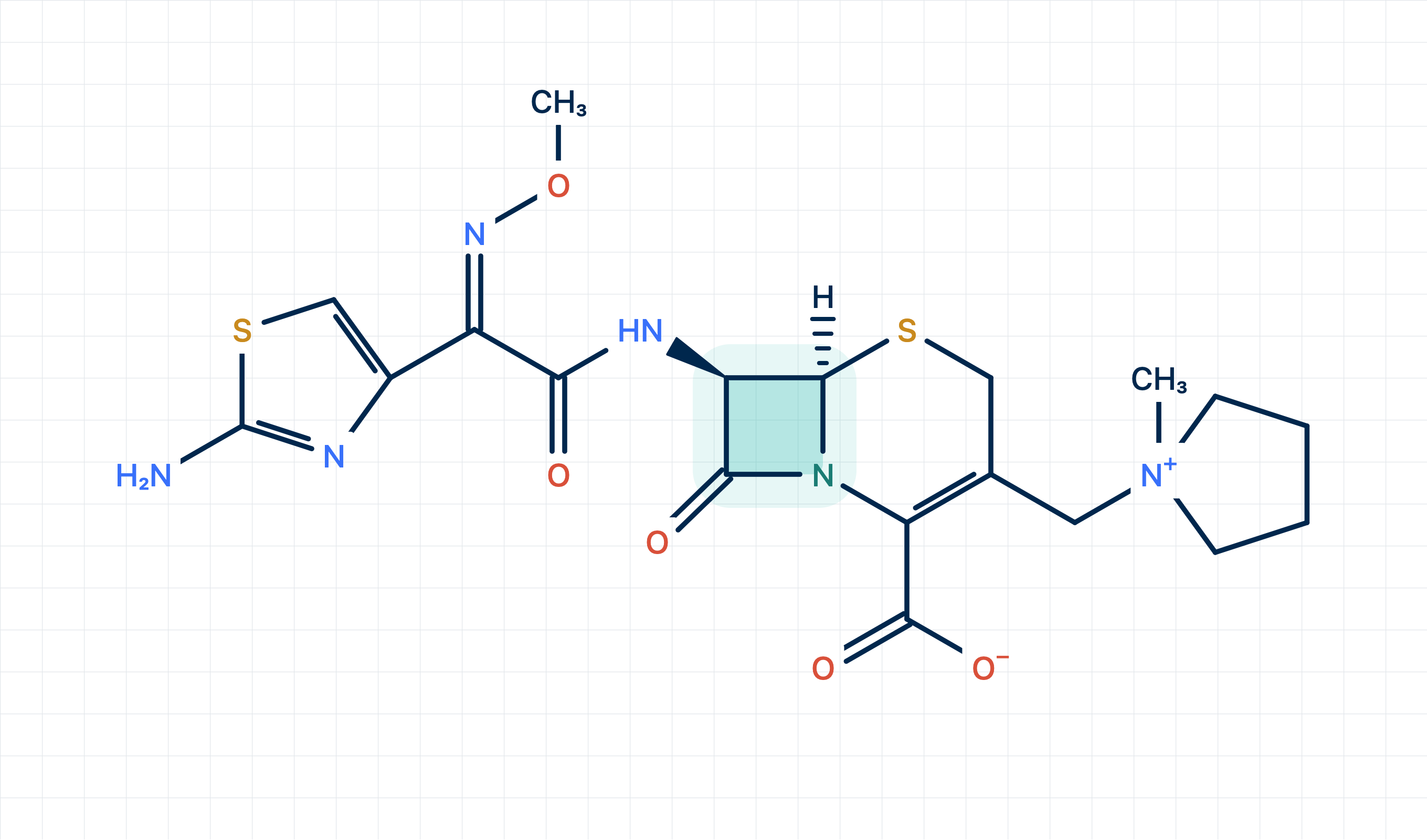
Beta-lactam antibiotics remain foundational to the treatment of serious infections, yet substantial pharmacokinetic variability can make standard dosing unreliable in acutely ill patients. One study even found that individual patient variation in beta-lactam PK parameters of up to 30-fold, wider than the variation seen across populations.
In response, an international multidisciplinary panel of 19 experts developed consensus guidance for beta-lactam dose individualization, endorsed by seven professional societies and organizations. The authors set out to answer key questions about the clinical impact, requirements to successfully implement, and the considerations of beta-lactam dose individualization. They did this by performing a much needed systematic review and meta analysis, which included randomized controlled trials as well as observational studies, to inform their recommendations and best practice statements.
Of note, in the guidance document, the authors intentionally use model-informed personalized dosing (MIPD) rather than “model-informed precision dosing.” The authors explain that the phrase personalized medicine better reflects the goal of achieving both accurate and precise dosing for the individual patient.
That distinction is more than semantic. It emphasizes using patient-specific information, drug concentrations, and pharmacokinetic (PK) models to proactively and continually refine dosing for the person being treated.
Which patients should be considered for dose individualization?
The panel supports beta-lactam dose individualization for several acutely ill populations at increased risk of altered drug exposure, including patients with:
- Critical illness, including sepsis and septic shock
- Augmented renal clearance
- Acute kidney injury and chronic kidney disease
- Extracorporeal support, including ECMO and kidney replacement therapy
- Blood purification therapies, including hemoadsorption and plasmapheresis
Each of these populations can experience substantial and rapidly changing pharmacokinetics, which is precisely where standard dosing is least reliable.
From reactive TDM to proactive MIPD
One of the guidance’s clearest suggestions is a move toward incorporating proactive MIPD at the start of therapy using pharmacokinetic models, rather than relying solely on traditional, reactive therapeutic drug monitoring (TDM).
With proactive MIPD, patient-specific factors (e.g., age, weight, serum creatinine) can be incorporated from the start, personalizing therapy from the first dose rather than waiting for a serum drug level to be ordered and resulted. Measured concentrations can then be integrated with a population PK model and patient-specific characteristics to further refine an individual’s pharmacokinetics and inform subsequent dosing. In section 5.1.1, the authors note:
The panel supports the use of proactive MIPD with beta-lactam concentrations over traditional reactive TDM, while recognizing that either approach is preferable to dosing without individual concentration data.
Turning guidance into clinical practice
The guidance supports integrating beta-lactam dose individualization into established clinical workflows and drawing on implementation experience from other individualized antibiotic dosing programs, such as vancomycin.
Successful programs should engage multidisciplinary stakeholders, including pharmacy, infectious diseases, laboratory, informatics, nursing, and institutional leadership. Programs should also evaluate adoption, workflow performance, barriers, and outcomes at regular intervals. Antimicrobial stewardship teams are particularly well positioned to support this ongoing evaluation, and the guidance document includes a familiar reference in section 4.2.1:
The panel supports patterning beta-lactam dose individualization workflows after those of other antibiotics such as vancomycin.
When implementing, programs will need to create policies and protocols that incorporate beta-lactam PK/PD targets. The guidance recommends a minimum PK/PD target of 100% fT>MIC and a best practice suggestion to target 100% fT>4*MIC in infection sites with decreased distribution (e.g., meningitis) for optimal clinical cure rates. This is based on data of clinical cure.
Our team also previously published on the PK/PD principles behind beta-lactam dosing, including time-dependent antimicrobial activity, %fT>MIC, sources of pharmacokinetic variability in critically ill patients, and the growing role of TDM in individualizing beta-lactam exposure.
What this means for clinical teams
The guidance not only provides recommendations and best practice statements, but it also reflects a broader evolution in beta-lactam dosing: from dosing without measured concentrations, to not only getting concentrations but also toward incorporating population-based dosing with patient-specific, model-informed decision-making.
By combining population PK models, measured concentrations, and individual patient characteristics, MIPD provides a framework for adapting beta-lactam antibiotic therapy as a patient’s pharmacokinetics change.
For teams already familiar with “model-informed precision dosing,” the acronym may look familiar, but the new guidance makes its intended meaning explicit.
That “personalized” terminology puts the individual patient at the center of the dosing decision while retaining the quantitative, model-informed framework needed to make personalization actionable.